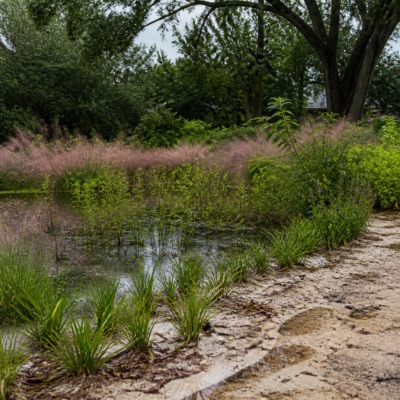
Key details: What subsurface condition should a Jacksonville design test for?
The NRCS description of Leon soil identifies a restrictive spodic layer within 30 inches. A Jacksonville planting and drainage plan should verify the actual soil profile on site before locating beds or irrigation.
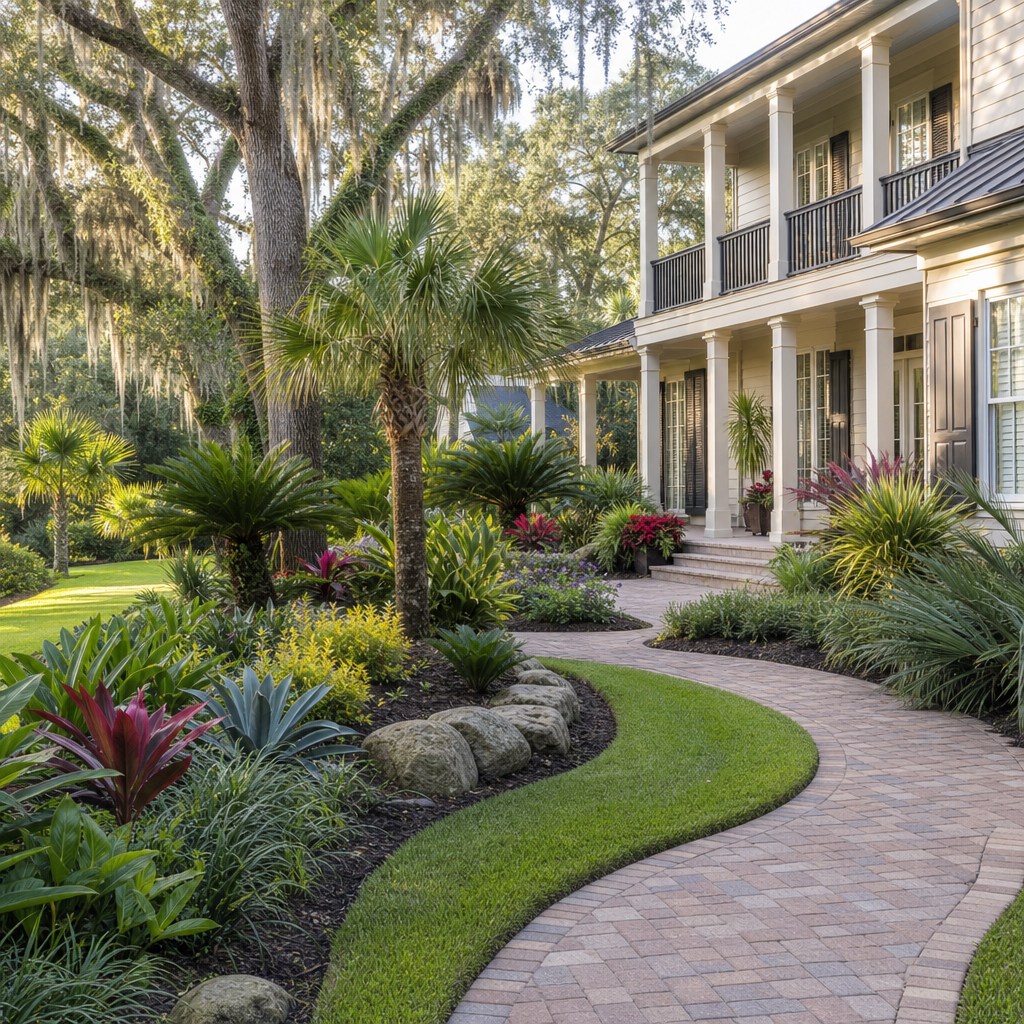
Jacksonville Pro Landscape designs custom yards for homes and commercial sites. We build each design for Northeast Florida’s coastal climate, sandy soil, and growing conditions. Every design uses what truly thrives in Duval County, not what looks good in a generic plant catalog.
Jacksonville’s growing conditions rule out most plants that work elsewhere, even in other parts of Florida. The sandy soil drains too fast and holds few nutrients. Salt air near the coast burns tender leaves. Humidity feeds fungus all year. Hard summer rain floods beds and drowns roots without good drainage. And full sun pushes soil past 100 degrees in July and August.
A designer who ignores these conditions picks plants that look great on day one. They die in their first Jacksonville summer. Our designs start with a site review — soil, sun, drainage, salt air, and current plants — before we pick a single plant.
Full Property Design — Complete plans for new builds or full redos. We design it all, from foundation beds and specimen trees to bed layout, hardscape, irrigation zones, and outdoor lighting. Each full design comes with a scaled plan, a plant list, and install specs.
Jacksonville foundation-bed planning. Start with measured wall clearances, drainage paths, windows, utilities, mature plant dimensions, and maintenance access. The plan should identify each selected species and source its suitability claims; do not infer nativity or safety from membership on a municipal or extension list.
Florida-Native and Florida-Friendly Design — We focus on plants native to Northeast Florida or proven to do well here. They need little extra water or chemicals. Native designs save water, draw pollinators, and need less care than standard ornamental yards.
Coastal and Salt-Tolerant Design — Homes near Jacksonville Beach, Neptune Beach, Atlantic Beach, and Ponte Vedra Beach need plants. These plants take constant salt. We pick salt-tolerant species and add windbreak plants to shield tender plants from direct salt spray.
Commercial Landscape Design — Office parks, retail centers, HOAs, and apartments need designs that look sharp. They stay easy to maintain. Our commercial designs weigh street visibility, foot traffic, water efficiency, and long-term upkeep cost.
The best plants for Jacksonville grew up in this climate or adapted to it. Our core palette includes muhly grass for its bold fall plumes and near-zero care. Firebush brings year-round red flowers that draw hummingbirds. Coontie for its deep green leaves that thrive in sun or shade. We add Simpson’s stopper for its dense evergreen form and salt tolerance. We plant Walter’s viburnum for its white spring flowers and wildlife value, and sabal palms, the iconic Florida palm that takes whatever Jacksonville brings.
For turf, we suggest St. Augustine for most homes. We use Bahia for large sunny lots where drought tolerance matters. We install Zoysia for part-shade areas that need a dense, fine lawn. Bermuda is best for high-traffic and sports areas.
For shade trees, live oaks are still the gold standard in Jacksonville. They are huge, long-lived, wind-resistant, and define Northeast Florida’s best blocks. Red maples, bald cypress, and Southern magnolia are strong picks too, with seasonal color and wildlife value.
Design consultations are free. Install costs run from $2,500 for a basic foundation refresh. A full home transformation with hardscape, irrigation, and lighting runs $25,000 or more. Most standard front-and-back yard installs in Jacksonville run $5,000 to $15,000. The main cost drivers are lot size, plant choices, soil work, and whether hardscape is part of the design.
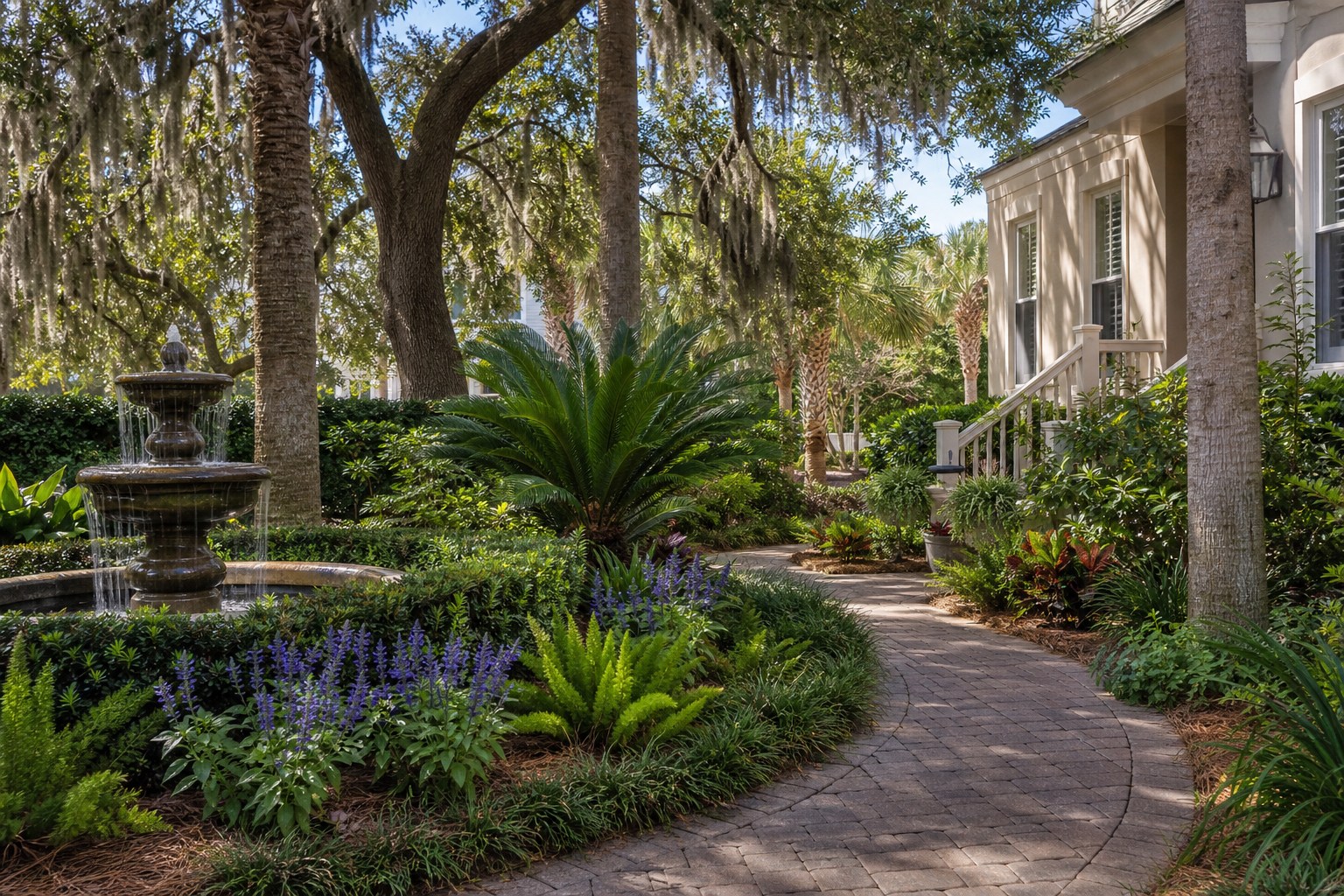
How should the project detail frame Landscape Design?
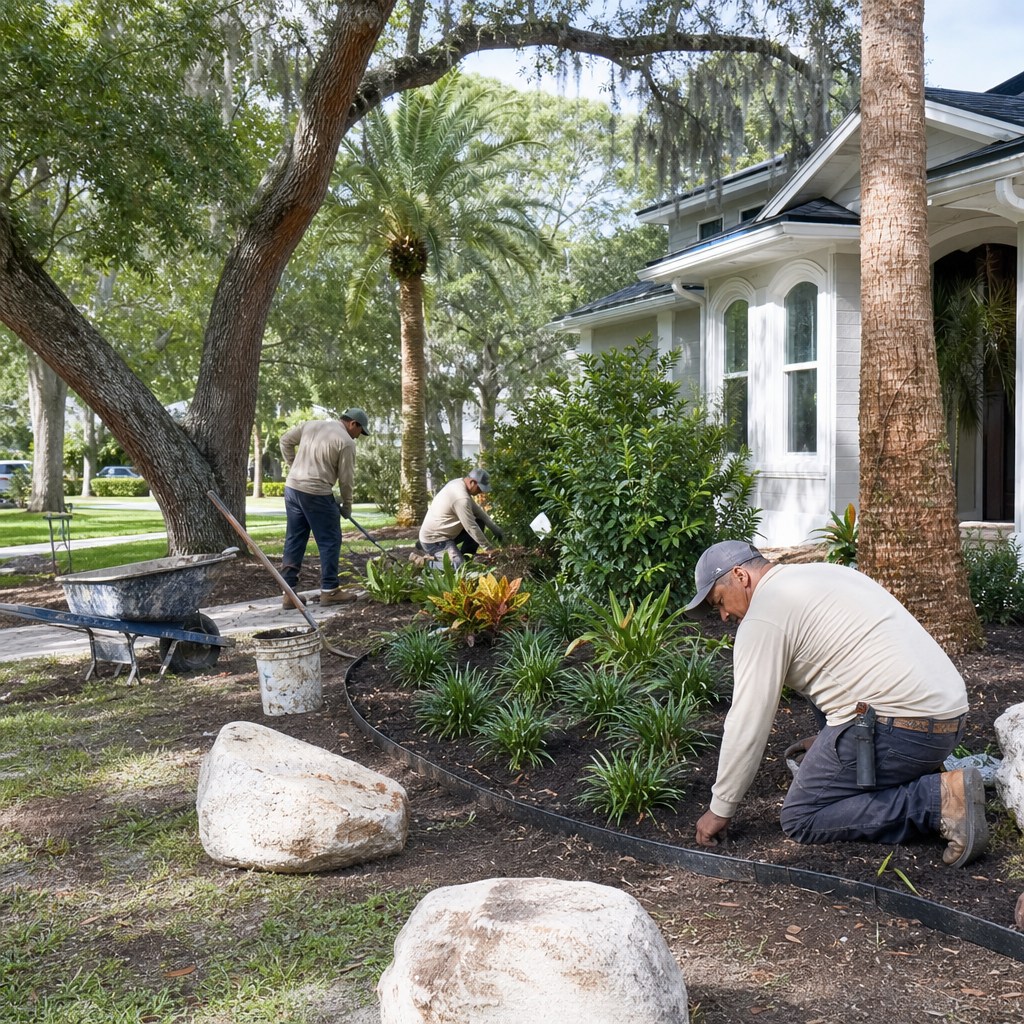
A Jacksonville owner can begin the landscape design inquiry with photographs, measurements, access notes, and priorities. Ask each bidder to define evaluation steps, boundaries, charges, and acceptance.
Process Overview
- Site assessment and consultation
- Written estimate with line-item scope
- Scheduled work window confirmed
- Crew executes against the written estimate
- Completion walkthrough with the homeowner